Showing posts with label books. Show all posts

Sunday, May 17, 2009

Book Review: Charles R. Knight, Autobiography of an Artist

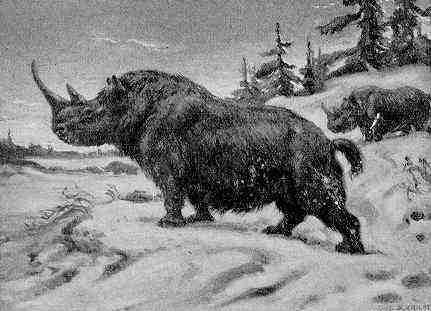
Charles R. Knight was one of the most influential paleontological artists of the 20th (and latest 19th) century. His iconic paintings of Tyrannosaurus, Brontosaurus, woolly rhinos, and other prehistoric animals have influenced the direction of scientific thought, inspired movies and toys, and motivated paleontologists for decades. Every paleontologist, whether consciously or not, owes a debt of gratitude to Knight and his work.

I was particularly thrilled to receive a copy of Knight's autobiography for my birthday recently. This slim paperback, largely written by the author himself, is a fascinating glimpse into one of paleontology's vivid imaginations.

The story opens in Knight's childhood, with his earliest recollections of visits to the newly-founded American Museum of Natural History, among other memories. He details his early loss of vision in one eye, a sometimes strained relationship with his stepmother, and an early trip across the Atlantic to visit his father's family. The prose offers a window into a lost (but not necessarily simpler) time, as we see the stirrings of an interest in natural history.

The next phase of the book covers Knight's initial training in art, from sketches to stained glass. A parade of characters passes by at this and other points in the book, from the obscure, to the eccentric, to the famous. We learn about Knight's first wildlife art, and then his near-chance meeting with paleontologist Jacob Wortman. So began a paleo-art career that was to span decades.

The rest of the book largely functions as a travelogue, with occasional vignettes of paleontological characters. Most fascinating for me, as a dinosaur paleontologist, were the pages devoted to Knight's collaboration with Edward Drinker Cope. Knight describes in detail the faded glory of Cope's home at 2102 Pine Street, packed to the brim with papers and bones. Curiously, despite the tremendous influence that Cope had upon Knight's early art, the men only knew each other for a few months before Cope's death.

Perhaps because Knight wrote the book as an autobiography rather than a paleontological treatise, the reader gets only the briefest glimpse into Knight's imagination and thoughts on prehistory. The book is focused on people and places, rather than on the fossils. Some readers may be disappointed by this, but I found the format quite engaging from start to finish. Judicious editing by Jim Ottaviani helps the book flow along quickly--the manuscript was left unfinished by Knight, so I am sure it took a little bit of work to whip the text into shape.

The book is greatly augmented by a few pages of text from some notables--forewords by Ray Bradbury and Ray Harryhausen, and afterwords by a number of paleontologists from the American Museum of Natural History. Illustrations by Mark Schultz bring to life many of the distinctive characters (including what is probably the earliest description of a "crazy snake guy"). Finally, memories from Charles Knight's granddaughter, Rhoda Knight Kalt, add a unique perspective and a fitting tribute. If you're looking for an enjoyable read in the field this summer, make sure to pack this book!

Charles R. Knight, Autobiography of an Artist, by Charles R. Knight (with forewords, introductions, and afterwords by a number of other folks), 112 pages, published by G. T. Labs, Ann Arbor, Michigan.

Thursday, September 11, 2008

Book Review: Microvertebrate Fossil Assemblages

Microvertebrate Fossil Assemblages: Their Role in Paleobiology and Paleobiogeography, edited by Julia T. Sankey and Sven Baszio (Indiana University Press, 2008)

Indiana University Press’s Life of the Past series has unleashed a wealth of scientific and popular books on various aspects of paleontology. The latest offering, Microvertebrate Fossil Assemblages: Their Role in Paleobiology and Paleobiogeography, continues this fine tradition. The editors, Julia Sankey and Sven Baszio, are no strangers to the world of microvertebrate fossils (those tiny teeth, vertebrae, scales and other bones from fish, reptiles, non-avian dinosaurs, birds, and amphibians), having published many papers of their own focusing on microvertebrate assemblages from the Late Cretaceous of North America. Here, the editors have brought together a fine collection of papers primarily addressing this very topic. The general nature of the volume’s title does not entirely accurately reflect the papers within, however – the vast majority of the 13 chapters focus on continental microvertebrates from the Cretaceous of western North America. It may disappoint workers of Cenozoic or Paleozoic strata, or those who study marine facies, to see such small notice given to non-Cretaceous, non-terrestrial deposits. Despite this debatable “shortcoming,” there is much to admire here.

The first chapter, by Sven Baszio, lays out potentials and pitfalls of microvertebrate assemblages for answering a variety of questions. Clearly, much progress has been made in this front since the first major screenwashing efforts of the 1960s. A second chapter, by Jamniczky et al., addresses a method for estimating the sufficiency of a sample for characterizing a microsite. Such statistical rigor is clearly needed. Schiebout et al.’s contribution represents the only section of the entire volume that does not dwell largely in the Mesozoic – here, the authors document associations of Cenozoic-aged mammalian fossils within pedogenic concretions.

The next three chapters address microvertebrate assemblages and their role in paleoecological reconstruction. Brinkman examines the role of microvertebrates in reconstructing guild structure within the Dinosaur Park Formation of Alberta, Canada. He pays particular attention to the role that taphonomy plays in how we reconstruct extinct ecosystems. Chapters by Sankey and DeMar and Breithaupt report on assemblages from the Aguja Formation of Texas and the Mesaverde Group of Wyoming, respectively.

A chapter by Fiorillo represents the only paper focused primarily on functional morphology. Here, Fiorillo uses microwear to examine potential variation in diet within sauropods from the Morrison Formation. Somewhat surprisingly, he reports that microwear patterns did not vary within taxa (regardless of where they lived), suggesting uniform diets. Unfortunately, no statistics are presented to validate this conclusion. This is a minor point, but a nagging one for my brain, which thrives on the “numbers game”!

The remaining chapters are largely systematic in nature. Sankey and Longrich each have their own chapter addressing theropod teeth from the Lance and Hell Creek Formations. Sankey provides a particularly useful table of measurements, and both chapters are well-illustrated. Apparently, the two authors come to somewhat different conclusions on systematics of isolated theropod teeth. In particular, Longrich floats the hypothesis that teeth referred to Richardoestesia (R. isosceles and R. gilmorei) all come from the same animal known as Paronychodon! This thus implies a heterodont dentition. Many of the small theropod taxa from the Lance and Hell Creek Formations are known only from teeth – it will take some well-preserved jaw material to sort out the true identity of most of these morphotaxa.

Currie and Coy report on a bird tooth from the Belly River Group; this tooth is particularly unusual for its serrated morphology. Welsh and Sankey then describe numerous types of eggshell from the Aguja Formation of Texas – clearly, a wide variety of dinosaur taxa were nesting in this area!

The final two chapters of the book, by Gardner and Böhme, and Gardner, focus on the less “glamorous” side of microvertebrate fauna: amphibians. Despite the fact that amphibians don’t have the cachet usually afforded dinosaurs, the chapters in question are important for clarifying the systematics and taxonomy of these groups. The numerous photographs in Gardner’s contribution on frogs will be very useful for those of us who have struggled with identifying frog material in the past.

Now, on to the “nuts and bolts” of the book itself. The hardcover volume is a convenient size and attractively jacketed, as is typical of the IUP series. The dust jacket art, by Russell Hawley with coloration by Nick Longrich, presents a dynamic reconstruction of many of the animals revealed in Cretaceous vertebrate microassemblages. In terms of the chapters themselves, the editors did a remarkably fine job of proofing the manuscripts, and typos are scarce (not always the case in some recent IUP volumes). One minor annoyance is the fact that none of the chapters have an abstract or summary at the beginning (and many don’t even have a summary at the end!). This makes it somewhat difficult for the casual reader to determine quickly the overall gist of an individual contribution. The illustrations are generally very well-reproduced, with good contrast and clarity. The book itself has a list price similar to comparable volumes ($59.95), but a quick search on Amazon (or a trip to the SVP meetings) will find some decent discounts.

My initial reaction to the papers in this book is that there is still a long way to go in understanding even the best-studied microfaunas of North America. Gardner’s chapter on frogs, and Sankey and Longrich’s chapters on theropods, particularly highlight this point. The taxonomy and systematics of these clades, even within the heavily-sampled Bug Creek fauna, or the Belly River Group fauna, is not yet settled in some cases. This should give heart to those of us early in our careers! And, the “guild analysis” presented by Brinkman also may point the way to other future studies. Finally, it never hurts to have more samples, focusing on different horizons and collecting methodologies.

So, who should buy this volume? I would say that anyone working in the Late Cretaceous of North America would do well to purchase a copy, as would those who work on some of the taxa detailed within (small theropods, frogs, etc.). Kudos to the editors and authors on this interesting contribution!

Saturday, August 23, 2008

Book Review: The Life of a Fossil Hunter

Fieldwork is one of the real pleasures for many paleontologists, as well as the source of endless headaches. The weather is nearly always hot, the fossils beneath concrete-hard sediment, and vehicles have a way of breaking down at inopportune times and places. But when you find that prize specimen. . .wow! A paleontologist's lifestyle is tough to explain - and I've found few books that really do the field justice.

The single best book on field paleontology, bar none, is a little gem by Charles H. Sternberg. The Life of a Fossil Hunter, published in 1909, is one of the few popular paleontology books that I've read cover-to-cover, multiple times. What is it that makes this such a pleasure to read and re-read?

In short, Sternberg's love of fossils comes through in every page. During his long and productive career, he collected everything from fossil leaves to synapsids to dinosaurs. Yet, it isn't just this interest in the past that fascinates me as a reader. Most revealing is the honest, unvarnished look at the field. One particularly gripping chapter discusses the ups-and-downs of an expedition to the Permian beds of Texas. Initial successes were followed by weeks of barren outcrop. Then, when all hope seemed to be lost, a spectacularly productive horizon was found, with specimen after specimen of Diplocaulus and other critters. Anyone who has worked in the field knows the sinking feeling caused by an unproductive horizon - and the joy upon finally finding something!

A major highlight of the book is its insight into the early days of fossil collecting in the American West. Edward Drinker Cope is prominent, and is humanized (and idolized) in Sternberg's telling. You learn of a man with a great sense of humor, bravery, and support for his collectors. You also see some incredibly risky (and stupid) tasks in the field. . .striking off across the badlands in the middle of a moonless night, for instance. Although some of the descriptions of interactions with Native Americans are rather racist by modern standards, the tales also convey an accurate depiction of the mood of the day among travelers and pioneers in those days. Fieldwork in the western US is rugged, but nowhere near the level that it was in the 1870s!

The book also excels in bringing the long-dead back to life. Although some of the prose (here and throughout the book) is rather old-fashioned, it still conveys the vivid imagination of the author. "Watch that ripple! It is caused by a shoal of mackerel scurrying in toward shallow water, in a mighty column five feet deep. They are flying for their lives, for they have seen behind them their most terrible enemy, a monster fish with a muzzle like a bulldog's. . ." [p. 59, describing Xiphactinus audax, a fish from the Western Interior Seaway] My only disappointment is that such reconstructions are scattered sparingly throughout the book, and largely in its opening half.

Finally, Sternberg's oddly modest pride in his accomplishments permeates the entire text. "I shall perish, but my fossils will last as long as the museums that have secured them." (p. 248) This was not a man who demanded first authorship on every paper (or even authorship), or naming rights, or any of the other privileges common in academic paleontology today. All he asked for was simple acknowledgment of his role in the collection, preparation, and preservation of the fossils. Most popular accounts of paleontology are written by the "big shots" - stories by the anonymous field collectors and preparators are usually lost in the shuffle. As a window into a vanished age of paleontology, a conversation with a famed paleontologist, and an unparalleled look at the joys and travails of fieldwork, The Life of a Fossil Hunter is certainly on my list for a third (and fourth!) read-through.

Read on-line or get a free PDF of The Life of a Fossil Hunter from Google Books.